-
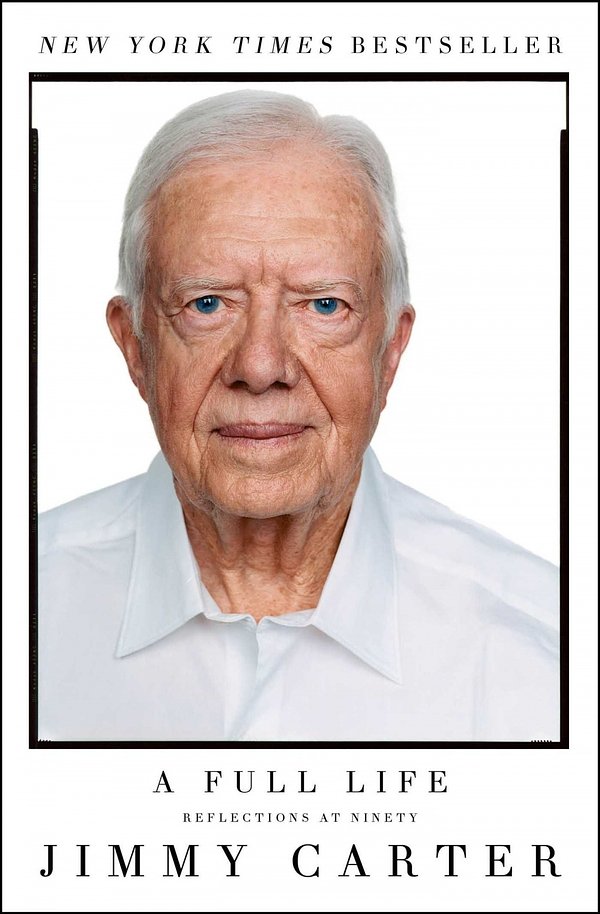 In his major New York Times bestseller, Jimmy Carter looks back from ninety years of age and "reveals private thoughts and recollections over a fascinating career as businessman, politician, evangelist, and humanitarian" ( Booklist ). At ninety, Jimmy Carter reflects on his public and private life with a frankness that is disarming. He adds detail and emotion about his youth in rural Georgia that he described in his magnificent An Hour Before Daylight . He writes about racism and the isolation of the Carters. He describes the brutality of the hazing regimen at Annapolis, and how he nearly lost his life twice serving on submarines and his amazing interview with Admiral Rickover. He describes the profound influence his mother had on him, and how he admired his father even though he didn't emulate him. He admits that he decided to quit the Navy and later enter politics without consulting his wife, Rosalynn, and how appalled he is in retrospect. In his "warm and detailed memoir" ( Los Angeles Times ), Carter tells what he is proud of and what he might do differently. He discusses his regret at losing his re-election, but how he and Rosalynn pushed on and made a new life and second and third rewarding careers. He is frank about the presidents who have succeeded him, world leaders, and his passions for the causes he cares most about, particularly the condition of women and the deprived people of the developing world. "Always warm and human...even inspirational" ( Buffalo News ), A Full Life is a wise and moving look back from this remarkable man. Jimmy Carter has lived one of our great American livesfrom rural obscurity to world fame, universal respect, and contentment. A Full Life is an extraordinary read from a "force to be reckoned with" ( Christian Science Monitor ).
 -
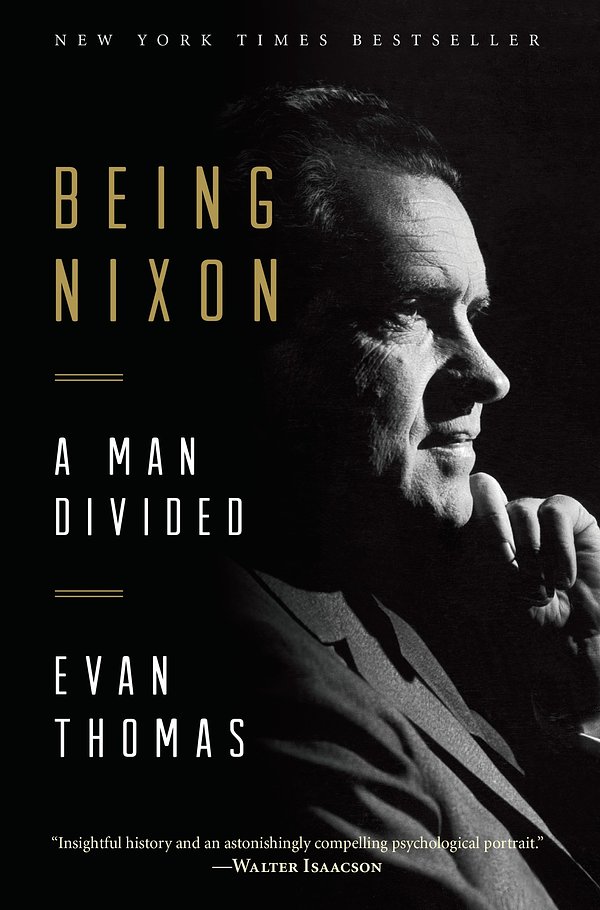 NAMED ONE OF THE TEN BEST NONFICTION BOOKS OF THE YEAR BY "TIME "AND ONE OF THE BEST BOOKS OF THE YEAR BY "RICHMOND TIMES-DISPATCH" What was it really like to be Richard Nixon? Evan Thomas tackles this fascinating question by peeling back the layers of a man driven by a poignant mix of optimism and fear. Walter Isaacson, author of"Steve Jobs"Evan Thomas delivers the best single-volume biography of Richard Nixon to date, a radical, unique portrait of a complicated figure who was both determinedly optimistic and tragically flawed. The "New York Times" bestselling author of "Ike s Bluff "and" Sea of Thunder, "Thomas brings new life to one of American history s most infamous, paradoxical, and enigmatic politicians, dispensing with myths to achieve an intimate and evenhanded look at the actual man. What drove a painfully shy outcast in elite Washington society a man so self-conscious he refused to make eye contact during meetings to pursue power and public office? How did a president so attuned to the American political id that he won reelection in a historic landslide lack the self-awareness to recognize the gaping character flaws that would drive him from office and forever taint his legacy? In "Being Nixon, " Evan Thomas peels away the layers of the complex, confounding figure who became America s thirty-seventh president. The son of devout Quakers, Richard Nixon (not unlike his rival John F. Kennedy) grew up in the shadow of an older, favored brother and thrived on conflict and opposition. Through high school and college, in the navy and in politics, he was constantly leading crusades and fighting off enemies real and imagined. As maudlin as he was Machiavellian, Nixon possessed the plainspoken eloquence to reduce American television audiences to tears with his career-saving Checkers speech; meanwhile, his darker half hatched schemes designed to take down his political foes, earning him the notorious nickname Tricky Dick. Drawing on a wide range of historical accounts, Thomas reveals the contradictions of a leader whose vision and foresight led him to achieve detente with the Soviet Union and reestablish relations with communist China, but whose underhanded political tactics tainted his reputation long before the Watergate scandal. One of the principal architects of the modern Republican Party and its silent majority of disaffected whites and conservative ex-Dixiecrats, Nixon was also deemed a liberal in some quarters for his efforts to desegregate Southern schools, create the Environmental Protection Agency, and end the draft. A deeply insightful character study as well as a brilliant political biography, "Being Nixon" offers a surprising look at a man capable of great bravery and extraordinary deviousness a balanced portrait of a president too often reduced to caricature. Praise for" Being Nixon" A biography of eloquence and breadth . . . No single volume about Nixon s long and interesting life could be so comprehensive. " Chicago Tribune" Terrifically engaging . . . a fair, insightful and highly entertaining portrait. "The Wall Street Journal" Thomas has a fine eye for the telling quote and the funny vignette, and his style is eminently readable. "The New York Times Book Review" Thomas proves an amiable and fair-minded tour guide. "The Boston Globe" Sharp and briskly written. " Time" A measured, concise, and important American biography. Michael Beschloss, author of "Presidential Courage" "From the Hardcover edition.""
 -
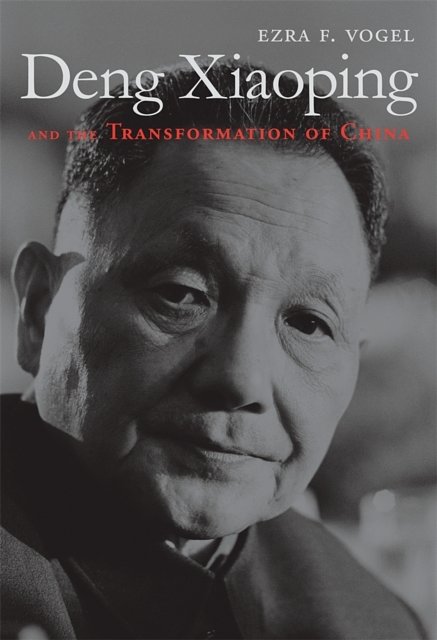 Perhaps no one in the 20th century had a greater long-term impact on world history than Deng Xiaoping. This title provides a biography of his life. The book also explores the transformation of China.
 -
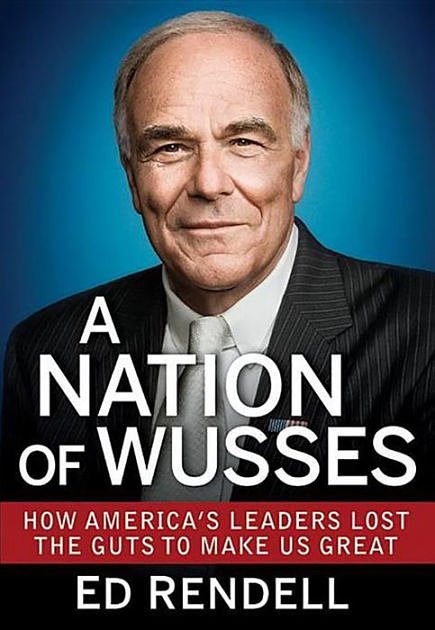 Governor Ed Rendell explains why America's leaders rarely call for sacrifice for the greater good--to avoid making any sacrifices themselves <p>Rendell has seen job security become the primary consideration of any person with power in America--their own job security Most politicians and bureaucrats can see no further ahead than the next election, sometimes no further than the next press conference. Americans are rarely afraid of sacrifice and hard work when they mean building a better future, but when was the last time you heard of a leader of anything making a sacrifice for the greater good? The people can only win when they make it clear to the powers that be that making the right choices, even the hard ones, is the key to winning the next election. Explains in rollicking stories ranging from the profane to the profound that most hard choices are only "hard" because the polls conflict with your principlesEd Rendell rose to the top of Philadelphia, then Pennsylvania, then national politics, by doing what he thought was right, and there were plenty of times that looked like it would be his downfall as wellThis book revisits the high points of Ed Rendell's career and current landscape to define the political fights his peers seem just as afraid of winning as losing Rendell is a former head of the Democratic National Committee, and a current MSNBC Senior Political Analyst</p>
 -
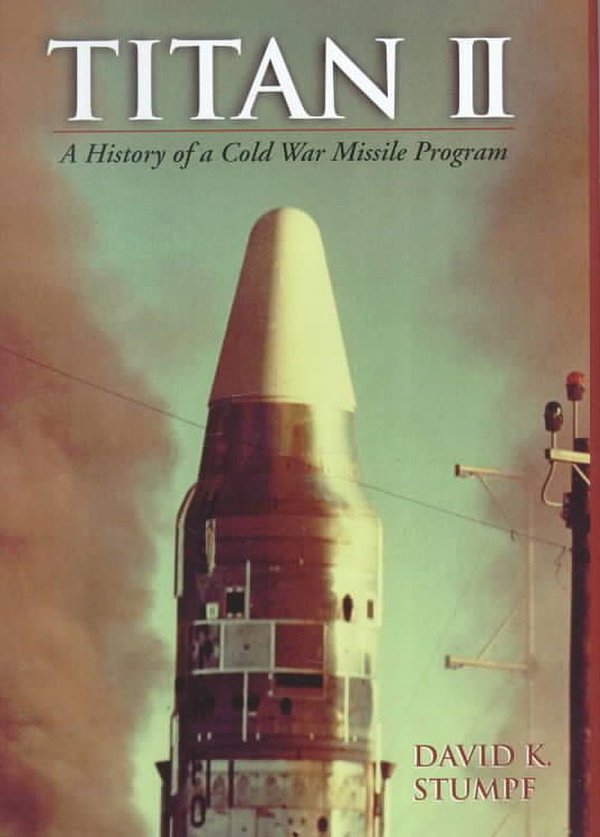 The Titan II ICBM (intercontinental ballistic missile) program was developed by the United States military to bolster the size, strength, and speed of the nation's strategic weapons arsenal in the 1950s and 1960s. Each missile carried a single warhead -- the largest in U.S. inventory -- used liquid fuel propellants, and was stored and launched from hardened underground silos. The missiles were deployed at basing facilities in Arkansas, Arizona, and Kansas and remained in active service for over twenty years. Since military deactivation in the early 1980s, the Titan II has served as a reliable satellite launch vehicle.<p>This is the richly detailed story of the Titan II missile and the men and women who developed and operated the system. David K. Stumpf uses a wide range of sources, drawing upon interviews with and memoirs by engineers and airmen as well as recently declassified government documents and other public materials. Over 170 drawings and photographs, most of which have never been published, enhance the narrative. The three major accidents of the program are described in detail for the first time using authoritative sources.</p><p>Titan Il will be welcomed by librarians for its prodigious reference detail, by technology history professionals and laymen, and by the many civilian and Air Force personnel who were involved in the program -- a deterrent weapons system that proved to be successful in defending America from nuclear attack.</p>
 -
 The global phenomenon. The Sunday Times Number One Bestseller. The New York Times Top Ten Bestseller., Planet Earth is 4.5 billion years old. In just a fraction of that time, one species among countless others has conquered it. Us., We are the most advanced and most destructive animals ever to have lived. What makes us brilliant? What makes us deadly? What makes us Sapiens? In this bold and provocative book, Yuval Noah Harari explores who we are, how we got here and where we're going. Sapiens is a thrilling account of humankind's extraordinary history - from the Stone Age to the Silicon Age - and our journey from insignificant apes to rulers of the world 'It tackles the biggest questions of history and of the modern world, and it is written in unforgettably vivid language., You will love it!' Jared Diamond, author of Guns, Germs and Steel 'Unbelievably good. Jaw dropping from the first word to the last' Chris Evans, BBC Radio 2 Yuval's follow up to Sapiens, Homo Deus, is available now.
 -
 INSTANT NEW YORK TIMES BESTSELLER AND PERFECT HOLIDAY GIFT "My new favorite book of all time." --Bill Gates If you think the world is coming to an end, think again: people are living longer, healthier, freer, and happier lives, and while our problems are formidable, the solutions lie in the Enlightenment ideal of using reason and science. Is the world really falling apart? Is the ideal of progress obsolete? In this elegant assessment of the human condition in the third millennium, cognitive scientist and public intellectual Steven Pinker urges us to step back from the gory headlines and prophecies of doom, which play to our psychological biases. Instead, follow the data: In seventy-five jaw-dropping graphs, Pinker shows that life, health, prosperity, safety, peace, knowledge, and happiness are on the rise, not just in the West, but worldwide. This progress is not the result of some cosmic force. It is a gift of the Enlightenment: the conviction that reason and science can enhance human flourishing. Far from being a na ve hope, the Enlightenment, we now know, has worked. But more than ever, it needs a vigorous defense. The Enlightenment project swims against currents of human nature--tribalism, authoritarianism, demonization, magical thinking--which demagogues are all too willing to exploit. Many commentators, committed to political, religious, or romantic ideologies, fight a rearguard action against it. The result is a corrosive fatalism and a willingness to wreck the precious institutions of liberal democracy and global cooperation. With intellectual depth and literary flair, Enlightenment Now makes the case for reason, science, and humanism: the ideals we need to confront our problems and continue our progress.
 -
 Believe it or not, today we may be living in the most peaceful time in out species' history. In this epic exploration of the human condition, Steven Pinker shows that, despite the constant stream of news about war, crime and terrorism, violence of all kinds has been decreasing. Barbaric practices such as human sacrifice, torture-executions and chattel slavery have been abolished; rates of death from...
 -
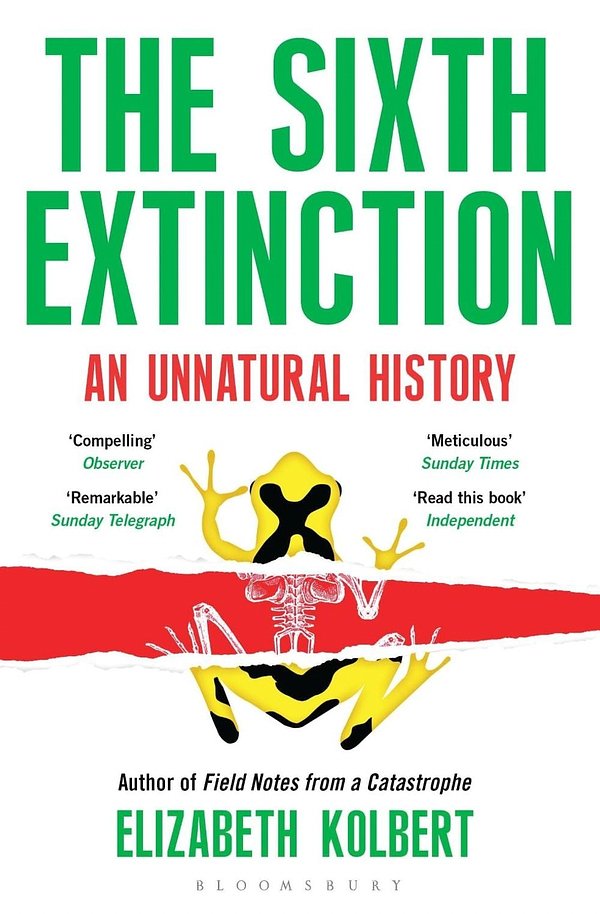 A major book about the future of the world, blending natural history, field reporting and the history of ideas and into a powerful account of the mass extinction happening today
 -
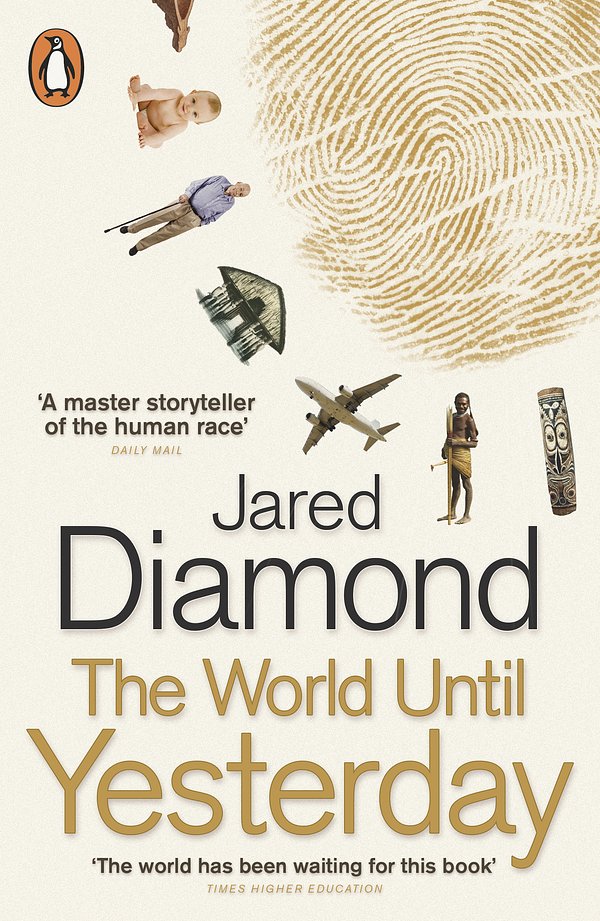 The no. 1 bestselling author of Collapse and Guns, Germs and Steel explores the profound lessons that traditional societies offer us todayOver the past 500 years, the West achieved global dominance, but do Westerners necessarily have better ideas about how to raise children, care for the elderly, or simply live well? In this epic journey into our past, Jared Diamond reveals that traditional societies around the world offer an extraordinary window into how our ancestors lived for the majority of human history - until virtually yesterday, in evolutionary terms. Drawing on decades of his own fieldwork, Diamond explores how tribal people approach essential human problems, from health and diet to conflict resolution and language, and discovers they have much to teach us.Jared Diamond is the Pulitzer Prize-winning author of the seminal million-copy-bestseller Guns, Germs, and Steel, which was named one of TIME's best non-fiction books of all time, and Collapse, a #1 international bestseller., A professor of geography at UCLA and noted polymath, Diamond's work has been influential in the fields of anthropology, biology, ornithology, ecology and history, among others.
 -
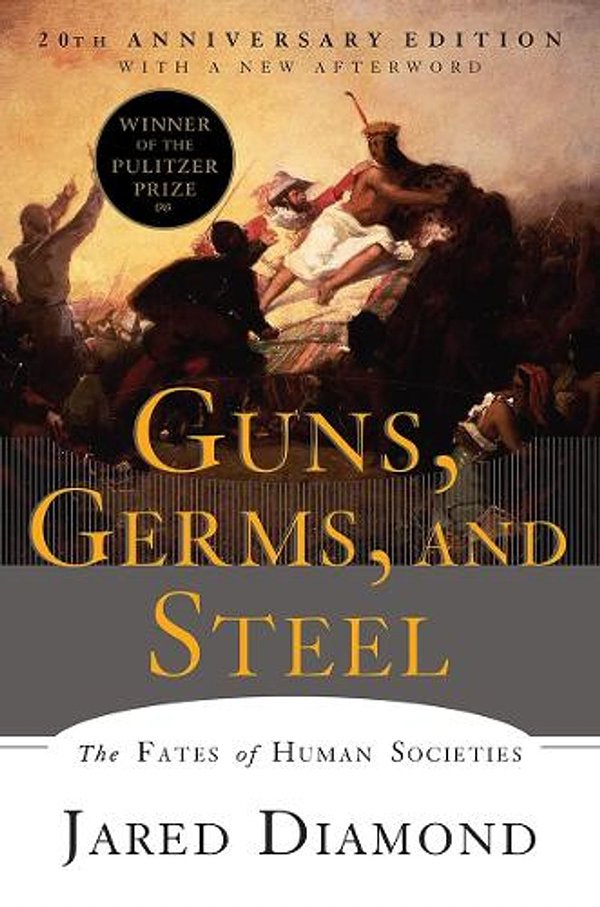 In this "artful, informative, and delightful" (William H. McNeill, New York Review of Books) book, Jared Diamond convincingly argues that geographical and environmental factors shaped the modern world. Societies that had had a head start in food production advanced beyond the hunter-gatherer stage, and then developed religion --as well as nasty germs and potent weapons of war --and adventured on sea and land to conquer and decimate preliterate cultures. A major advance in our understanding of human societies, Guns, Germs, and Steel chronicles the way that the modern world came to be and stunningly dismantles racially based theories of human history. Winner of the Pulitzer Prize, the Phi Beta Kappa Award in Science, the Rhone-Poulenc Prize, and the Commonwealth club of California's Gold Medal.
 -
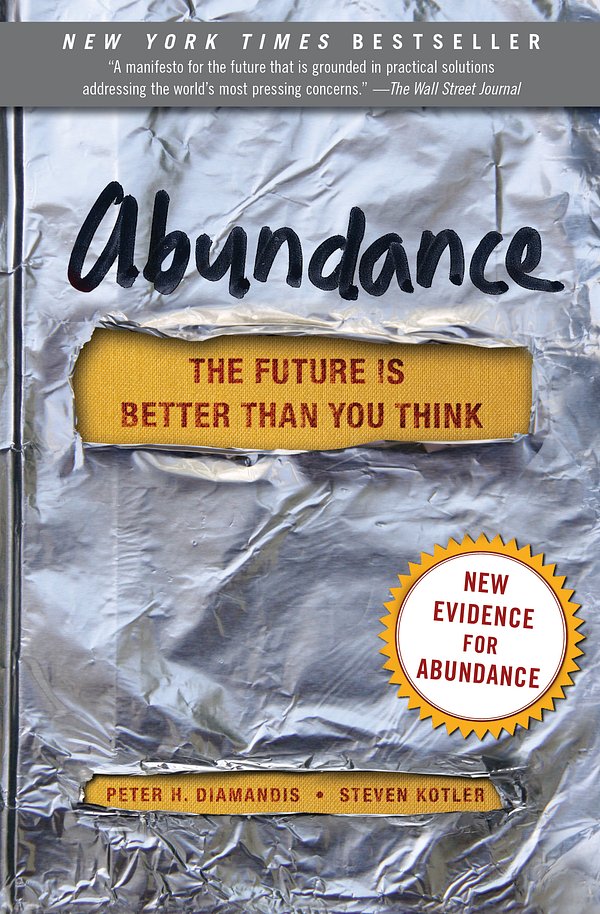 TheNew York Timesbestselling "manifesto for the future that is grounded in practical solutions addressing the world's most pressing concerns: overpopulation, food, water, energy, education, health care and freedom" (The Wall Street Journal). Since the dawn of humanity, a privileged few have lived in stark contrast to the hardscrabble majority. Conventional wisdom says this gap cannot be closed., But it is closing-fast. InAbundance, space entrepreneur turned innovation pioneer Peter H. Diamandis and award-winning science writer Steven Kotler document how progress in artificial intelligence, robotics, digital manufacturing synthetic biology, and other exponentially growing technologies will enable us to make greater gains in the next two decades than we have in the previous 200 years., We will soon have the ability to meet and exceed the basic needs of every person on the planet. Abundance for all is within our grasp. Breaking down human needs by category-water, food, energy, healthcare, education, freedom-Diamandis and Kotler introduce us to innovators and industry captains making tremendous strides in each area., "Not only isAbundancea riveting page-turner...but it's a book that gives us a future worth fighting for. And even more than that, it shows us our place in that fight" (The Christian Science Monitor).
 -
 Extend the human story backward for the five thousand years of recorded history and it covers no more than a millionth of a lifetime of the Earth. Yet how do we humans take stock of the history of our planet, and our own place within it? A "vast historical mosaic" ( Publishers Weekly ) rendered engaging and accessible, Big History interweaves different disciplines of knowledge to offer an all-encompassing account of history on Earth. Since its publication, Cynthia Brown's "world history on a grand scale" ( Kirkus ) has been translated into nine languages and has helped propel the "big history" concept to viral status. This new edition of Brown's seminal work is more relevant today than ever before, as we increasingly must grapple with accelerating rates of change and, ultimately, the legacy we will bequeath to future generations. Here is a pathbreaking portrait of our world, from the birth of the universe from a single point the size of an atom to life on a twenty-first-century planet inhabited by 7 billion people.
 -
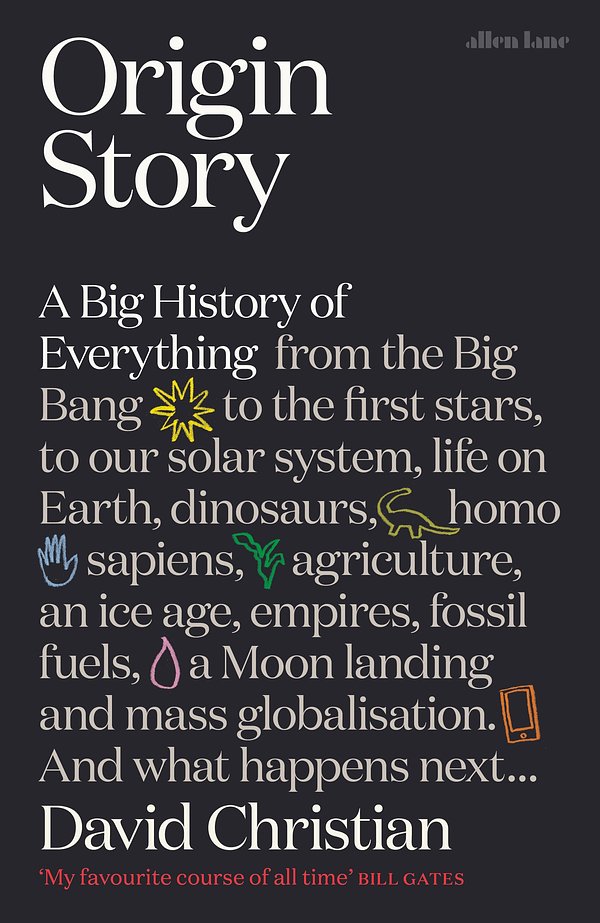 How did we get from the Big Bang to today's staggering complexity, in which seven billion humans are connected into networks powerful enough to transform the planet? And why, in comparison, are our closest primate relatives reduced to near-extinction?Big History creator David Christian gives the answers in a mind-expanding cosmological detective story told on the grandest possible scale. He traces how, during eight key thresholds, the right conditions have allowed new forms of complexity to arise, from stars to galaxies, Earth to homo sapiens, agriculture to fossil fuels. This last mega-innovation gave us an energy bonanza that brought huge benefits to mankind, yet also threatens to shake apart everything we have created.This global origin story is one that we could only begin to tell recently, thanks to the underlying unity of modern knowledge. Panoramic in scope and thrillingly told, Origin Story reveals what we learn about human existence when we consider it from a universal scale.
 -
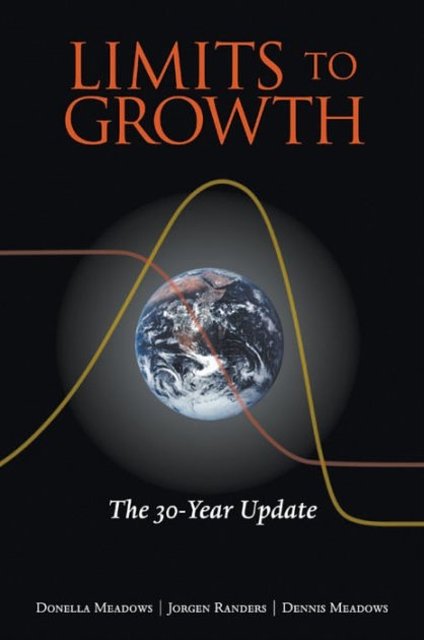 In 1972, three scientists from MIT created a computer model that analyzed global resource consumption and production. Their results shocked the world and created stirring conversation about global 'overshoot, ' or resource use beyond the carrying capacity of the planet. Now, preeminent environmental scientists Donnella Meadows, Jorgen Randers, and Dennis Meadows have teamed up again to update and expand their original findings in "The Limits to Growth: The 30 Year Global Update."<br>Meadows, Randers, and Meadows are international environmental leaders recognized for their groundbreaking research into early signs of wear on the planet. Citing climate change as the most tangible example of our current overshoot, the scientists now provide us with an updated scenario and a plan to reduce our needs to meet the carrying capacity of the planet.<br>Over the past three decades, population growth and global warming have forged on with a striking semblance to the scenarios laid out by the World3 computer model in the original "Limits to Growth." While Meadows, Randers, and Meadows do not make a practice of predicting future environmental degradation, they offer an analysis of present and future trends in resource use, and assess a variety of possible outcomes.<br>In many ways, the message contained in "Limits to Growth: The 30-Year Update" is a warning. Overshoot cannot be sustained without collapse. But, as the authors are careful to point out, there is reason to believe that humanity can still reverse some of its damage to Earth if it takes appropriate measures to reduce inefficiency and waste.<br>Written in refreshingly accessible prose, "Limits to Growth: The 30-Year Update" is a long anticipated revival of some of the original voices in the growing chorus of sustainability. "Limits to Growth: The 30 Year Update" is a work of stunning intelligence that will expose for humanity the hazy but critical line between human growth and human development.
 -
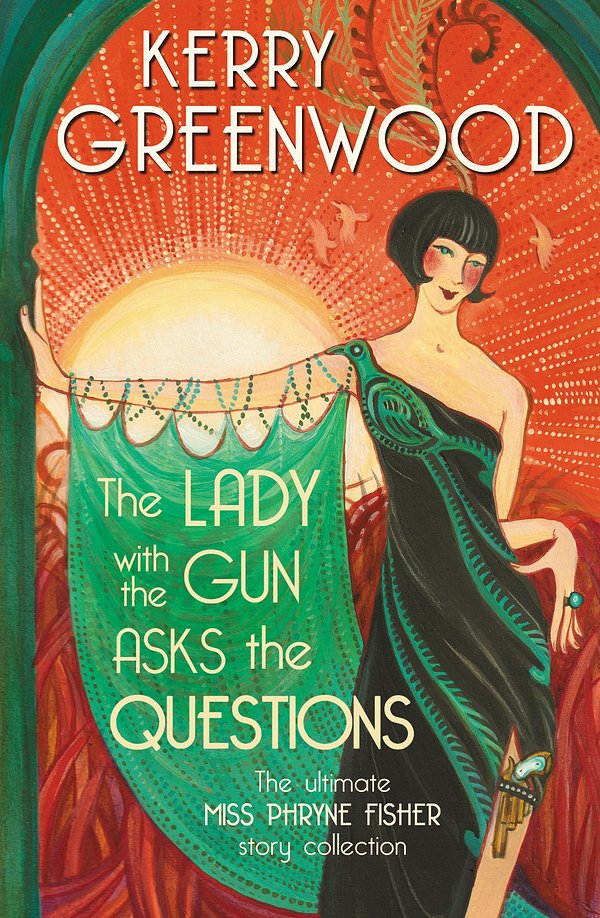
The Lady with the Gun Asks the Questions
The ultimate Miss Phryne Fisher collection
Kerry Greenwood
# Phryne Fisher MysteryThe Honourable Phryne Fisher - she of the Lulu bob, Cupid's bow lips, diamante garters and pearl-handled pistol - is the 1920s' most elegant and irrepressible sleuth. Miss Phryne Fisher is up to her stunning green eyes in intriguing crime in each of these entertaining, fun and compulsively readable stories. With the ever-loyal Dot, the ingenious Mr Butler and all of Phryne's friends and household, the action is as fast as Phryne's wit and logic. 'With Phryne Fisher, the indefatigable Greenwood has invented the character-you-fall-in-love-with genre.' The Australian -
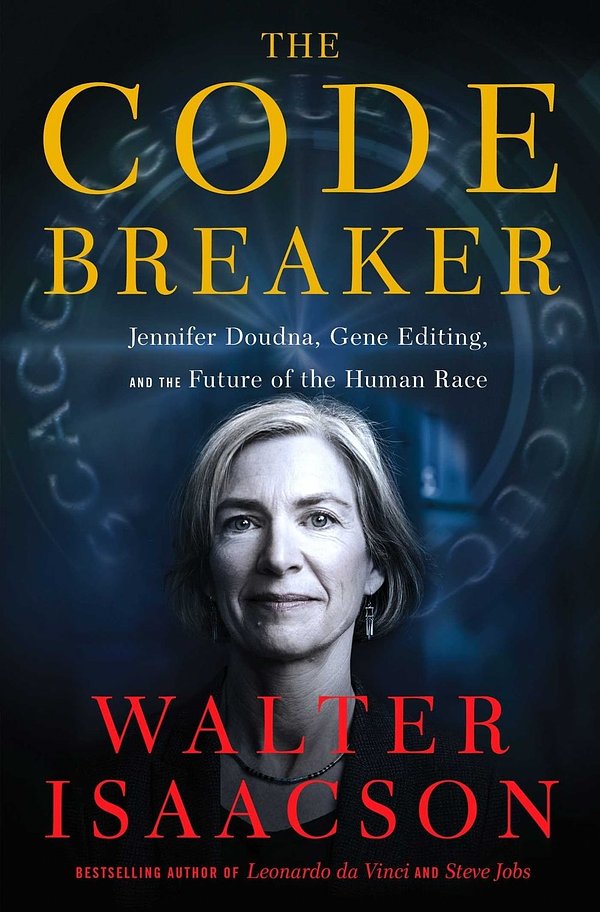 The bestselling author of Leonardo da Vinci and Steve Jobs returns with a gripping account of how Nobel Prize winner Jennifer Doudna and her colleagues launched a revolution that will allow us to cure diseases, fend off viruses, and have healthier babies. When Jennifer Doudna was in sixth grade, she came home one day to find that her dad had left a paperback titled The Double Helix on her bed. She put it aside, thinking it was one of those detective tales she loved. When she read it on a rainy Saturday, she discovered she was right, in a way. As she sped through the pages, she became enthralled by the intense drama behind the competition to discover the code of life. Even though her high school counselor told her girls didn't become scientists, she decided she would. Driven by a passion to understand how nature works and to turn discoveries into inventions, she would help to make what the book's author, James Watson, told her was the most important biological advance since his co-discovery of the structure of DNA. She and her collaborators turned a curiosity of nature into an invention that will transform the human race: an easy-to-use tool that can edit DNA. Known as CRISPR, it opened a brave new world of medical miracles and moral questions. The development of CRISPR and the race to create vaccines for coronavirus will hasten our transition to the next great innovation revolution. The past half-century has been a digital age, based on the microchip, computer, and internet. Now we are entering a life-science revolution. Children who study digital coding will be joined by those who study genetic code. Should we use our new evolution-hacking powers to make us less susceptible to viruses? What a wonderful boon that would be! And what about preventing depression? Hmmm...Should we allow parents, if they can afford it, to enhance the height or muscles or IQ of their kids? After helping to discover CRISPR, Doudna became a leader in wrestling with these moral issues and, with her collaborator Emmanuelle Charpentier, won the Nobel Prize in 2020. Her story is a thrilling detective tale that involves the most profound wonders of nature, from the origins of life to the future of our species.
 -
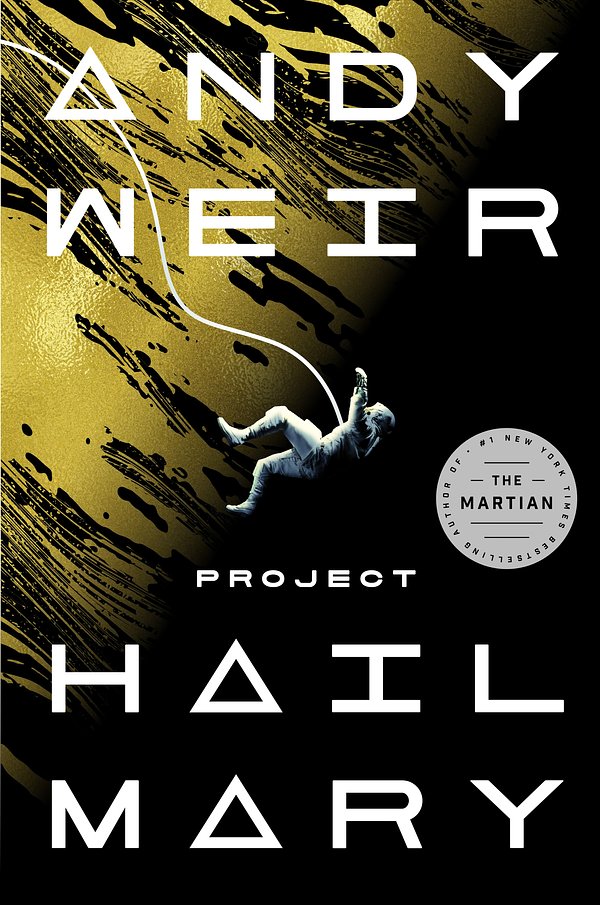 A lone astronaut. An impossible mission. An ally he never imagined. Ryland Grace is the sole survivor on a desperate, last-chance mission - and if he fails, humanity and the earth itself will perish. Except that right now, he doesn't know that. He can't even remember his own name, let alone the nature of his assignment or how to complete it. All he knows is that he's been asleep for a very, very long time. And he's just been awakened to find himself millions of miles from home, with nothing but two corpses for company. His crewmates dead, his memories fuzzily returning, Ryland realizes that an impossible task now confronts him. Hurtling through space on this tiny ship, it's up to him to puzzle out an impossible scientific mystery-and conquer an extinction-level threat to our species. And with the clock ticking down and the nearest human being light-years away, he's got to do it all alone. Or does he? An irresistible interstellar adventure as only Andy Weir could imagine it, Project Hail Mary is a tale of discovery, speculation, and survival to rival The Martian -- while taking us to places it never dreamed of going.
 -
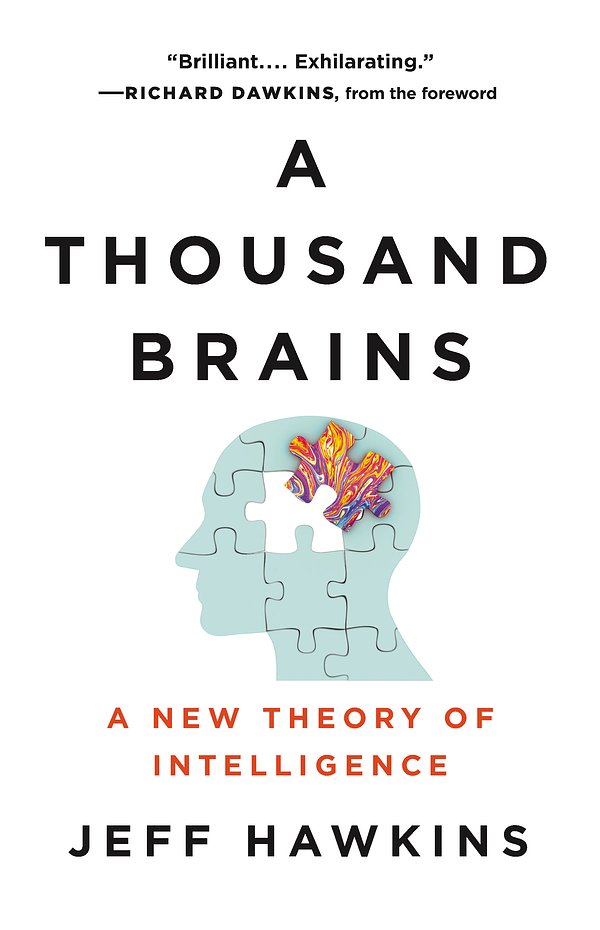 For all we hear of neuroscience's great advances, the field has generated more questions than answers. We know that the brain combines sensory input from all over your body into a single perception, but not how. We think brains "compute" in some sense, but we can't say what those computations are. We believe that the brain is organized as a hierarchy, with different pieces all working collaboratively to make a single model of the world. But we can explain neither how those pieces are differentiated, nor how they collaborate. Neuroscientist and computer engineer Jeff Hawkins argues that it's so hard to answer questions about the brain because our basic picture of how the brain works is wrong. In A Thousand Brains, Hawkins takes a radically new approach to the brain, with stunning implications. Hawkins' proposal, called the Thousand Brains Theory of Intelligence, is that your brain is organized into thousands upon thousands of individually computing units, called cortical columns. These columns all process information from the outside world in the same way, and each builds a complete model of the world. But because every column has different connections to the rest of the body, each has a unique frame of reference. Your brain sorts out all those models by conducting a vote. The fundamental job of the brain, therefore, is not to build a single thought, but to manage the thousands of individual thoughts it has every moment. With this powerful new framework, Hawkins is able to reassess some of neuroscience's most stubborn problems, like why pain needs to be painful to be useful, how we can understand that our perspective of a thing changes as we move around it, and why we might be conscious but individual pieces of our body aren't. And once you understand how the brain works, it is a lot easier to make one yourself. Hawkins is, above all, an engineer, and A Thousand Brains outlines how a new understanding of intelligence could lead to truly intelligent AI. Hawkins explores how we might create machines that can learn on their own, why we need not fear superintelligent systems, and how human and machine intelligence may someday merge. Combining cutting-edge theoretical neuroscience with an ambitious program for tomorrow's digital minds, A Thousand Brains heralds a revolution in the study of intelligence. It is a big-think book, in every sense of the word.
 -
 From the bestselling and Booker Prize winning author of Never Let Me Go and The Remains of the Day, a stunning new novel - his first since winning the Nobel Prize in Literature - that asks, what does it mean to love? This is the story of Klara, an Artificial Friend with outstanding observational qualities, who, from her place in the store, watches carefully the behaviour of those who come in to browse, and of those who pass in the street outside. She remains hopeful a customer will soon choose her, but when the possibility emerges that her circumstances may change for ever, Klara is warned not to invest too much in the promises of humans. A thrilling feat of world-building, a novel of exquisite tenderness and impeccable restraint, Klara and the Sun is a magnificent achievement, and an international literary event.
ISBNs in this list
9781501115646, 9780812985412, 9780674725867, 9781118279052, 9781557286017, 9780099590088, 9780525559023, 9780141034645, 9781408851241, 9780141024486, 9780393354324, 9781451616835, 9781595588487, 9780241338377, 9781931498586, 9781760878191, 9780358567059